

Articles
Filters & sorting
Articles in the database: 1
Case Study: MES Implementation Like a Piece of Cake
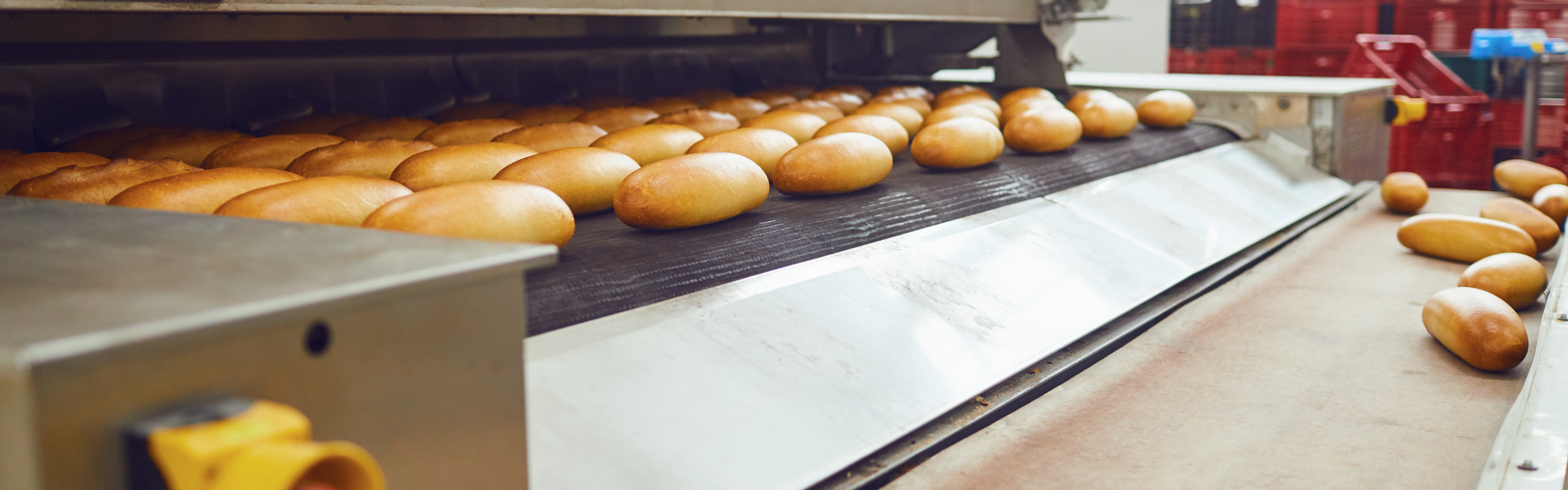
Efficient food production – especially bakery production – is a race against time. Short shelf lives and rigorous quality standards do not forgive mistakes. When it seems that the machinery park has already reached the upper limit of its capabilities, and the management begins to consider investing in new lines, it is worth asking one question: are we definitely using our full potential? The history of Lantmännen Schulstad shows that this is not necessarily the case. True production capacities often hide in micro-stoppages.
Schulstad is one of the key brands (and companies) belonging to Lantmännen Unibake. The brand ultimately joined the group in 2006, becoming an important operational element of this international powerhouse. It runs its branches not only in Scandinavian countries (Denmark, Sweden, Norway, Finland) but also in other parts of Europe.
For the bakery plants of the Lantmännen group, machines are the heart of the entire production. Five independent lines operate non-stop – 24 hours a day, 7 days a week. Each of them is characterized by different changeover times, speeds, and business goals. Operators are fully dependent on the failure-free functioning of the equipment, and every breakdown is a risk of unplanned overtime and material losses.
The company had a clear goal: to significantly increase efficiency. To achieve this, the management had to better understand how the machines actually work. A tool was needed to bring to light what was often missed on paper – micro-stoppages. The Operator Platform with a module measuring the OEE indicator helped with this.
How to tame micro-stoppages?
Traditional reports rarely record small, several-dozen-second-long stoppages. Employees simply do not have the time to write them down. However, on the scale of a week, month, or year, these small breaks begin to create a bottleneck.
The implementation of the Operator OEE module digitized this process and reversed the reporting logic. Crucially, the system does not wait for an employee to report a failure. Communicating directly with the machines, the software instantly “notices” every stop, even the shortest one. The operator on the shop floor only fills in the reasons for this stoppage on a dedicated touch screen. The reporting of daily events, therefore, takes place in real time, with flawless precision down to the second, and without burdening the crew with additional paperwork. What happens next?
Information about a failure is instantly displayed on the screens in the Maintenance Department (UR), whose main task is to maximize machine uptime. The first step for the technicians is to quickly restore production. Having precise data at their disposal, the Maintenance Department no longer acts in the dark. The team uses Pareto analysis within specific timeframes to identify those stoppages that have the greatest impact on the loss of operational time.
“Work smarter, not harder”
Digital dashboards have been installed on the production halls of Lantmännen Schulstad, visually presenting live current performance compared to the assumed target. Thanks to this, employees can see in black and white whether they are realizing the plan. This instant feedback allows them to act proactively, rather than just reacting to deviations at the end of the shift.
The use of an intuitive interface has given the factory precise data on the OEE indicator broken down into every single production order. Thanks to this, managers have unprecedented insight into the profitability of specific batches of baked goods.
Unlocking hidden capacities
The most impressive aspect of the transformation at Lantmännen Schulstad is how quickly the system brought tangible business benefits. The implementation of the software was spread out over a year, but it started with a smart step – a pilot on line number 2, which is the most complicated line in the entire plant.
The success? Instantaneous. The project paid back its investment costs already at the stage of this single pilot implementation. Once the system was optimized on the most difficult section, implementation on the remaining four lines was a simple “copy-paste” process.
The bakery network managed to find and release hidden processing capacities in its current machinery park. Instead of investing tens of millions in new machines to meet growing demand, the company squeezed more out of the equipment it already owned.
However, this is not the end of the story. The implementation of the Operator Platform in the Schulstad factory was such a spectacular success that the management of Lantmännen Unibake made a key business decision. The solution became a standard. The platform was implemented in many other factories belonging to this global group.
An industrial revolution does not always have to mean building a new factory. Sometimes it is enough to simply turn on the light in the current one. Cooperation with Operator Systems has proven that full visibility of processes is the most profitable path to manufacturing excellence.

JakubJaszczur
You've seen 1 of 1 article
That's all