
CRM System – What Is It and Why Does Your Business Need One?

KajaGrabowiecka
Table of contents
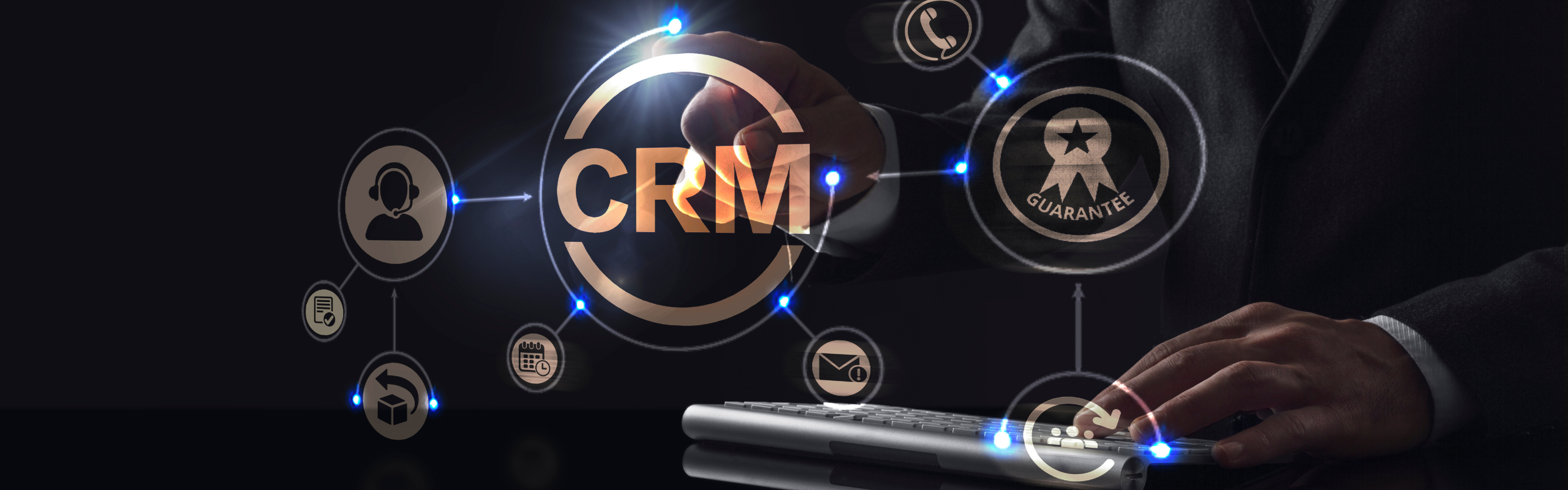
How do you maintain a high-quality relationship with your customers? The answer to this, as well as many other challenges related to sales and marketing, is a CRM system. it combines IT tools with an appropriate business strategy. Consequently, this allows for the collection of data about contractors and the building of a lasting competitive advantage through excellent customer service.
What does CRM mean and why is it important?
The acronym CRM (Customer Relationship Management) refers to managing relationships with customers – both current and potential. In today's market reality, competitive advantage is no longer built solely on price. Quality of service and speed of response have become key. These factors shape the customer experience and determine their loyalty.
A modern CRM system enables:
- Centralizing all customer data in one secure place,
- Remote access to contact lists, tasks, and calendars from a single device,
- Detailed insight into contact history, purchases, and customer preferences,
- Integration of email, calendar, and mobile phone,
- Automation of repetitive marketing and sales activities,
- Managing sales opportunities and precisely estimating future revenues,
- Monitoring the achievement of sales goals and KPIs,
- Improving external and internal communication within the company.
Many CRM systems also allow for the creation of sales offers. They enable the instant generation of personalized commercial proposals, which is a strong selling point in B2B and B2C discussions.
How does a CRM system work?
CRM serves as a central knowledge base about customers. Every interaction – from a phone call and email to a service request – is recorded in the system.
How does this look in practice?
- Sales representatives can check the full cooperation history before a call and better prepare for negotiations.
- The marketing department can precisely segment the database and run campaigns (e.g., mailings).
- The customer service department immediately sees requests and issues, shortening the time needed to resolve them.
Modern CRM systems are increasingly supported by Artificial Intelligence. AI solutions can remind users about follow-ups, suggest next sales steps, or analyze the chances of closing a given transaction.
What are the types of CRM software?
The choice of implementation model depends on the organization's specifics and technological needs. Three variants are most common:
- Cloud-based CRM – a solution available in a SaaS subscription model, accessed via the Internet. Popular due to easy scalability and the ability to use the system from any place and device.
- On-premise CRM – a system installed locally on the company's servers. It guarantees full control over data but involves higher maintenance and administration costs.
- CRM as an ERP module – many providers offer a Sales module that has functionalities similar to CRM. This is an ideal solution for companies that want to manage sales, finances, and production within a single, integrated environment.
CRM Implementation – How to do it effectively?
Implementing a system is not just about installing software, but primarily about changing the work culture. The tool will not bring the expected return on investment (ROI) if the team does not change its habits.
The most important stages of CRM implementation are:
- Defining business goals – does the company want to increase sales? Or perhaps shorten order fulfillment time?
- Process audit – analyzing the current way of working and user needs.
- Selection of the appropriate CRM system.
- Integration – configuring and connecting CRM with other systems, e.g., ERP or e-commerce platforms.
- Team training – preferably in a workshop format to translate theory into practice.
- Post-implementation support – regular system optimization with the support of an implementation partner.
How much does CRM cost?
The cost of implementation is an individual matter. It depends on the size of the industry, the number of users, and the scope of functionality. Subscription models (monthly fee per user) as well as one-time license purchases are available on the market. It should be remembered that the budget should cover not only the software itself but also training and configuration.
FAQ - Frequently Asked Questions
Who is a CRM specialist and what do they do?
A CRM specialist is an expert combining analytical, marketing, and technical competencies. They are responsible for process optimization, database management, and ensuring the system effectively supports sales. Their tasks include:
- Customer database management,
- Data analysis and reporting,
- Automation of marketing campaigns,
- Supporting the sales team.
Is CRM the same as ERP?
No. CRM and ERP are two different systems, although they often complement each other. CRM focuses on managing customer relationships. On the other hand, ERP covers all business processes, such as accounting, warehouse management, or production. In practice, many companies integrate both systems to have a full picture of their operations.
Is CRM only for large companies?
Absolutely not. CRM works for any organization that wants to organize customer information and plans to scale its business. Even foundations use them to manage relationships with donors.
How to learn CRM?
The best way to learn any system is to use it in practice. You can start by:
- Using a CRM demo version,
- Online courses in sales and marketing,
- Working with real data in a company. At the same time, it's worth remembering that every system implementation process includes training future users. The goal of such learning is not only to understand how to operate the tool but also the business processes themselves.
Can ChatGPT create a CRM?
ChatGPT, like other LLM models in conversational form, can support the creation of simple CRM solutions. Currently, AI can generate logic or database structures needed for a system. However, OpenAI's tool cannot replace a full-fledged CRM system in a company, especially in larger organizations where software scalability and data security are crucial.
How to make a CRM in Excel?
At the beginning of a business, Excel can perform basic CRM tasks. You can create a customer database, contact history, or sales pipeline in it. However, as the company scales, Excel quickly becomes insufficient. Spreadsheets primarily lack automation, and maintaining data control during team collaboration eventually becomes impossible.
Is SAP a CRM system?
SAP itself is not a CRM, but a provider of a broad business ecosystem. However, among its solutions, it offers a CRM solution – SAP Customer Experience.
Comments (0)
No comments here yet, start first!
Leave your comment
You may also read:
Key KPIs During System Implementation: How to Measure Project Success?
KajaGrabowiecka